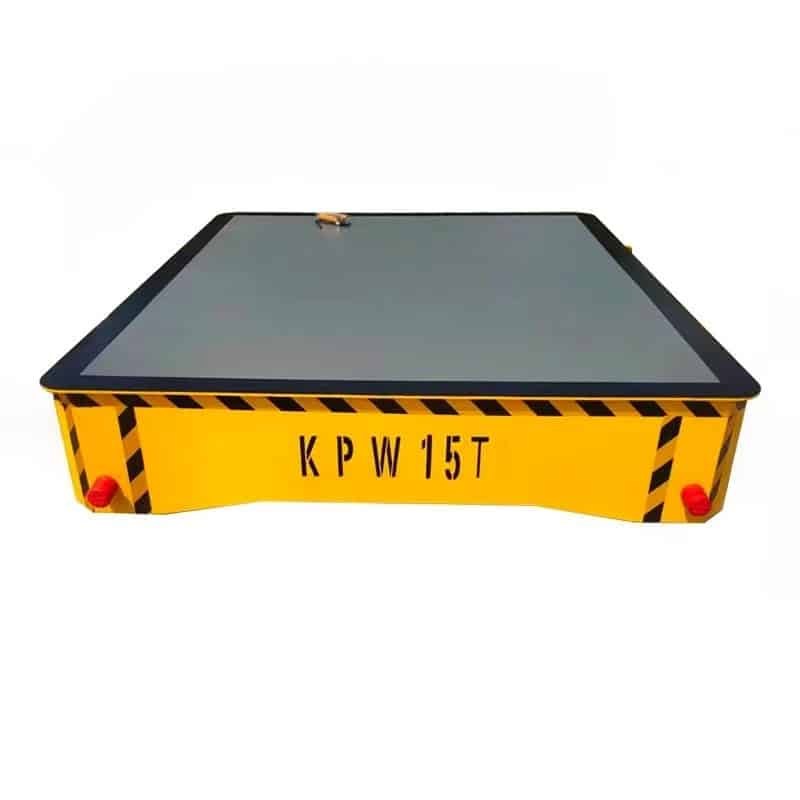
Many factory managers and procurement team members face unexpected downtime, frequent motor burnouts, or operational delays shortly after installing a new electric transfer cart. In most cases, the failure isn’t caused by low product quality—it stems from selecting a cart based solely on nominal load capacity rather than true engineering logic.
An electric transfer cart works by drawing electrical power from batteries, cable reels, or conductor bars to drive a heavy-duty motor and gear reducer, translating electrical energy into smooth, high-torque horizontal transport. When customers understand how duty cycles, power supply systems, and floor conditions interact, they stop guessing and start choosing the right transfer solution for their specific facility.
Is rated capacity the only spec that matters?
A common mistake in factory logistics planning is assuming a 20-ton cart will seamlessly move 20-ton loads under all circumstances. In real workshop operations, nominal capacity is only a baseline.
When configuring heavy-duty transfer carts, experienced engineers look beyond static weight. Dynamic forces during acceleration, floor slope, wheel friction, and uneven weight distribution heavily impact the required motor torque and structural load.
Why real working conditions reduce usable capacity?
-
01
Starting Torque and Acceleration Moving a static heavy load requires significantly more energy than maintaining motion. Sudden acceleration spikes the load on the motor and gear reducer.
-
02
Floor Conditions and Rail Alignment For trackless carts, rough concrete or soft shop floors dramatically increase rolling resistance. For rail carts, minor track misalignments create wheel friction that burdens the drive unit.
-
03
Duty Cycle and Heat Dissipation Operating a cart continuously for an 8-hour shift generates thermal stress. A cart rated for intermittent use will overheat if pushed into continuous duty.
Tracked vs. Trackless Transfer Carts: Which is better?
Buyers often debate whether to lay steel rails or invest in steerable trackless carts. Both technologies serve clear, distinct purposes. Tracked carts move along fixed steel rails, offering higher load limits, lower rolling resistance, and precise positioning. Trackless carts utilize polyurethane rubber wheels and hydraulic or motor steering, allowing 360-degree mobility across open factory floors.
Key trade-offs from real installation experience
For fixed-route, ultra-heavy bay-to-bay transfers, rail carts remain the most cost-effective solution. For flexible workshops requiring multi-directional movement, trackless carts eliminate infrastructure constraints.
How to choose the right power supply method?
The power system dictates a transfer cart’s continuous running time, maintenance schedule, and environmental adaptability. Comparing Battery, Cable Reel, and Conductor Line. Maintenance-Free Battery Power: Ideal for trackless carts and flexible indoor/outdoor routes. Provides complete mobility without trailing wires, though batteries require scheduled recharging. Cable Reel Power (Spring or Motorized): Best suited for medium-to-long distance rail carts operating on fixed tracks. Delivers continuous 24/7 power without charging downtime. Sliding Conductor Line (Busbar): Perfect for high-frequency, continuous heavy-duty rail transport across long factory bays, operating directly from plant AC power.